At a family gathering, I told everyone I was pregnant. My mother mocked me. “Your sister’s child is enough! Nobody wants your baby! Don’t give birth to trash!”
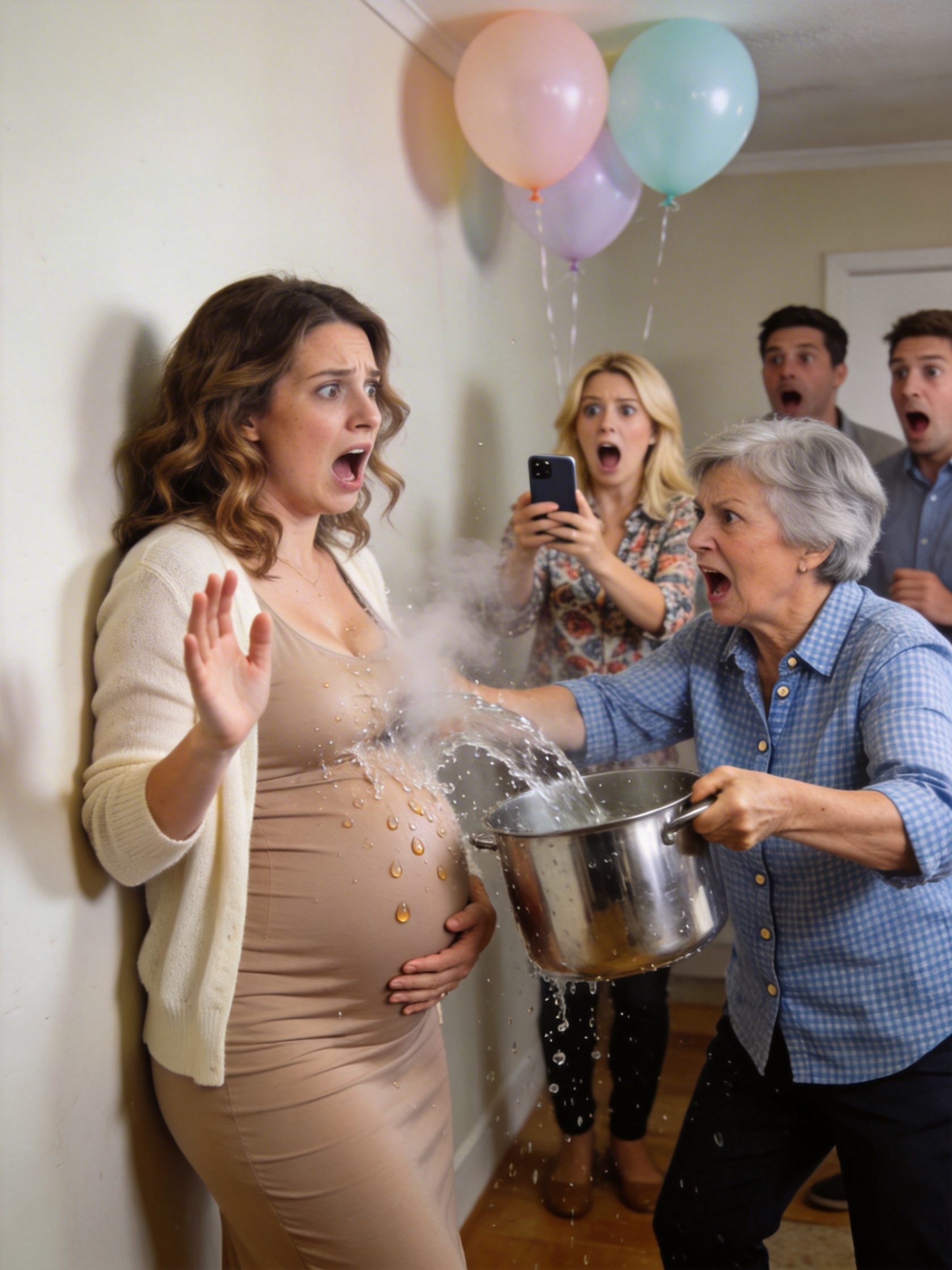
She grabbed a pot and poured boiling water over my belly. “You shouldn’t even exist!”
My sister just watched and laughed. I collapsed to the floor as pain flooded my body. But what happened next changed everything…
My name is Amy Watson. I’m a nurse at a hospital in Pennsylvania and I used to believe that a quiet suburb on the outskirts of Philadelphia meant a peaceful life.
Richmond Hills seemed like a safe place: trees, porches, neighbors who greeted me.
I didn’t know danger could come wearing my mother’s smile.
Richard, my husband, was the center of my world. He taught history at the local high school, drove an old car, and cared more about his students than his status. We had been married for three years and lived simply and happily.
My family never respected that simplicity.
My mother, Martha Johnson, worked in real estate and viewed money as a moral principle. My older sister, Victoria, followed her example.
Victoria owned a boutique, married a lawyer named Jason Clark, and curated her life online as if it were a magazine.
Her daughter Lily had just turned one, and to my mother, Lily was the crown jewel of the family.
For two years I tried to become a mother. I endured miscarriages and the silent humiliation of being told “relax.” Then my doctor pointed at the ultrasound and said, “Two heartbeats.”
Twins.
That night Richard held me while I cried—half from joy, half from fear. “Whatever they say,” he promised, “our babies are loved.” Still, I was terrified to tell my mother and sister.
With Lily’s first birthday party approaching, I knew the whole family would be there. Richard insisted we go. “We don’t need permission to share good news,” he said.
Martha’s house was full of relatives and forced cheer. Victoria greeted us with a tight smile.
I gave Lily a small wooden toy wrapped with a pink ribbon. Lily laughed and grabbed it—until Victoria snatched it from her hands and set it aside.
“How nice,” she said. “But she needs something better.”
I sat through dinner while Victoria bragged about her new car and a trip to Europe.
My mother praised her like a trophy and barely spoke to me unless it was to criticize my dress or my “small” life.
Richard kept his hand on mine under the table—a constant reminder that I wasn’t alone.
When the cake arrived, everyone gathered. Martha raised a glass and gave a speech about Victoria’s “perfect family.” Applause filled the room. My heart pounded. Richard nodded, and I stood up.
“I have an announcement,” I said. “Richard and I are expecting twins.”
The silence wasn’t surprise. It was judgment.
Martha narrowed her eyes. “On Lily’s day?” she said. “You’re trying to steal attention.”
“I’m not,” I whispered.
“You always do,” she snapped, loud enough for everyone to hear. “Always incompetent. Always jealous.”
Richard was at my side. “Stop,” he said, controlled but firm. “This is good news.”
My mother turned toward the kitchen as if she had decided something.
I followed her movement and saw steam rising from a pot on the stove. She grabbed it with both hands and came back, her face tight with rage.
“Nobody wants your babies,” she shouted. “Don’t bring more trash into this world!”
I barely had time to inhale before she tilted the pot. Boiling water hit my abdomen and poured down my thighs, burning through fabric and skin.
My scream echoed through the house. I collapsed, clutching my stomach, while I heard Richard shout my name and the room erupted into chaos.
Everything that followed became noise: chairs scraping, someone yelling for towels, Richard’s voice calling for an ambulance.
He tore off his jacket and pressed it against my belly, his hands shaking as if pressure could undo the heat.
In the ambulance, a paramedic checked my vitals and asked how far along I was.
I tried to answer through chattering teeth, thinking only: Please let them be alive.
At the hospital I was surrounded by bright lights. Nurses rushed me to triage.
A doctor examined the burns and ordered an emergency ultrasound. Richard held my hand until a nurse gently guided him back.
“Sir, we need to treat her now. We’ll keep you updated.”
The medication calmed me.
When I fully woke, it was night in the ICU. My abdomen and thighs were bandaged. Richard was asleep in a chair, slumped forward as if he hadn’t moved in hours.
“Richard,” I croaked.
He jolted awake and grabbed my hand. “I’m here.”
“The babies?” I whispered.
His face softened with relief. “They’re okay. The ultrasound was clear. The doctor said your clothes absorbed most of the heat.”
I cried until my chest hurt. A doctor explained I had second-degree burns and would need weeks of care; scarring was likely.
Every dressing change felt like being burned again. But my pregnancy appeared stable. I clung to that word like air.
The next morning two detectives came to my room. The detective spoke gently: “Mrs. Watson, can you tell us what happened?”
I described the party, my announcement, my mother’s insults, Victoria’s smile, the pot, the boiling water. The detective nodded while writing.
“We’ve arrested Martha Johnson and Victoria Clark,” she said. “Aggravated assault and fetal injury. Multiple guests recorded it. The evidence is overwhelming.”
They asked if I was willing to sign a formal statement and press charges.
My throat tightened, but I nodded. I had spent my life minimizing my mother’s cruelty so the family could “move on.”
This time, moving on meant protecting my children.
After the detectives left, my phone buzzed with missed calls from relatives: some apologizing, others silent, none brave enough to have stopped her.
Later Richard returned with a look I had never seen on him: quiet fury. He sat beside me and said, “I owe you the truth.”
An older man in an expensive suit entered with a briefcase. “Uncle Robert,” Richard said, then introduced him as Robert Morrison, the family lawyer.
Richard’s voice shook. “My family is wealthy. We’re the founding family of Watson Pharmaceuticals.”
I stared. “Why didn’t you tell me?”
“Because I wanted us to be real,” he said. “I chose an ordinary life. But they tried to hurt you—and our children. I won’t let you face this alone.”
Robert opened the briefcase and pulled out papers. “Criminal charges will be filed,” he said. “We’re also filing civil suits, seeking restraining orders, and cutting off any path back to you.”
That afternoon Richard’s parents arrived from Boston. I expected cold judgment. Linda Watson surprised me by taking my hand. “You’re family,” she said simply. “We’re here for you.”
Within days local media ran the story.
My mother’s photo appeared on television beneath words that turned my stomach. It was humiliating, but it meant the truth could no longer be buried.
When I regained my strength, I attended the first hearing. The prosecutor played party video. The courtroom went silent as my mother lifted the pot; then my scream echoed through the speakers.
Gasps rippled among the spectators. The judge’s gavel struck hard and final, and I understood my mother could no longer rewrite what she had done.
The trial forced me to relive the party in public. Robert Morrison kept it simple: medical records, witness statements, and the video of my mother tilting the pot toward my belly.
Doctors explained my burns and the danger that kind of trauma can pose to a pregnancy. Relatives testified to my mother’s insults before the assault.
The defense called it “a moment,” but the video showed intent, not accident, and Victoria’s satisfied calm.
Then Jason Clark took the stand.
He looked hollow. “After Amy announced the twins,” he said, “Victoria told me we had to stop it. She said Lily should remain the only grandchild.
The night before the party, I overheard her on the phone with Martha talking about ‘how to stop her.’ I thought it was cruel talk. I didn’t believe they would act.”
Victoria stared straight ahead. Martha sat rigid, saying nothing.
The jury returned a guilty verdict. I expected triumph. What I felt was grief: grief for all the years I tried to earn love that was never offered.
On sentencing day, Richard held my hand. The judge did not hesitate.
“Martha Johnson: eight years for aggravated assault and fetal injury.”
“Victoria Clark: five years as an accomplice.”
Damages came later, but money could not erase the image of boiling water striking my stomach.
A week later, at a prenatal check-up, Jason approached me holding Lily. Her eyes were bright and innocent, untouched by adult bitterness.
“I’m filing for divorce,” he said quietly. “I’m sorry. I want Lily to know her cousins, if you’ll allow it. I don’t want her raised with hate.”
I looked at Lily and chose the future over rage. “She can know them,” I said. “Just in a safe and honest home.”
With Richard’s parents’ support, we moved to a new house and prepared a nursery. Months later I gave birth to two healthy babies: Matthew and Sophia.
Holding them, my scars stopped being a source of shame and became proof.
I used part of the settlement to found Angel Wings, a foundation that helps survivors of family violence with legal aid, temporary housing, and therapy.
I couldn’t change what happened, but I could keep someone else from falling into the same trap.
In the months after delivery, recovery was slow. I did burn scar therapy, learned not to hide my abdomen, and returned to nursing part-time.
Every time I comforted a patient in pain, I remembered how powerless I felt on my mother’s kitchen floor and how much it mattered that someone believed me.
Angel Wings grew quickly: volunteers, donors, and local clinics partnered with us, and I watched women leave shelters with apartment keys and custody papers in hand.
Five years passed. Our backyard filled with laughter as Matthew and Sophia played with Lily on weekends.
Jason rebuilt his life and respected the boundaries I set. Our family wasn’t perfect, but it was real: built on protection, not performance.
That summer I visited Martha in prison. She entered the visiting room gray-haired and trembling.
“Amy,” she whispered. “I’m sorry.”
I didn’t offer easy forgiveness. “I came to finish this,” I said. “You no longer control my life. My children will know you made a terrible choice, and they’ll also know we didn’t build our future on hate.”
Martha cried and nodded. When I left, I felt lighter—not because she deserved relief, but because I did.
That night I read the children a story about a brave girl who chose boundaries over battles. Lily listened too and whispered, “I’m glad we’re family.”
If this story moved you, share your thoughts below: would you choose justice, forgiveness, or both for your family today?
© 2026 confesioneslatinas.net
El contenido de este sitio web está protegido por derechos de autor. Por favor, cite la fuente al copiar.